Biased reporting – 報道ステーション March 9th 2026

As always, this blog post and the opinions expressed are my own and do not necessarily represent the views of my employer.

報道ステーション (Hodo Station / News Station) is a news program on the TV Asahi network. I often watch it as one of the few news programs aired at 10 PM.

What triggered this post was the heavily biased coverage on March 9th. The program opened with roughly 10 minutes on the Iran situation, focusing almost exclusively on the Iranian side and human stories from Turkish interviews. There was virtually nothing about Iran’s missile and drone attacks on the UAE, Qatar, Saudi Arabia, Israel, or other Gulf states.

Newscaster Kensuke Okoshi (大越健介) concluded the segment with his commentary on the “different concepts of justice.” He stated as fact:

「今回、アメリカやイスラエルがイランの攻撃に一方的に踏み切ったことは、国際法の違反だという国際世論が圧倒的で、その意味では正義とは言えません。」

(“The unilateral military action by the US and Israel against Iran is considered a violation of international law by overwhelming international opinion, and therefore cannot be called justice.”)

He presented this not as his personal view, but as unquestionable reality. In his official postscript published the same day on the TV Asahi website, he went even further:

「明らかに国際法違反だと識者は指摘する。」 「軍事力に勝るアメリカという強者が、イランという国家を踏みにじる行為は国際法違反であり、看過できない。」

I’m very familiar with this style of biased reporting from the New York Times, The Guardian, and the BBC. But I was surprised to see it at this level on Japanese television. Of course media bias has been shaped by two years of conflict, but this specific report felt particularly one-sided.

Growing up, I always knew which newspapers leaned left or right. I learned early that I needed to read multiple sources to form my own opinion. During the Cold War, we understood that Soviet media’s job was to distort reality to fit the party line — yet it was sometimes still useful to read them to understand their perspective.

Today, when most mainstream media operates with a clear agenda, I wonder if we’re seeing the end of traditional journalism. If I can’t trust journalists to rigorously check facts, challenge assumptions, and present balanced context, who can I trust?

X (Twitter) is biased. Newspapers are biased. Television is biased. We’re constantly fed information shaped by political views — and sometimes outright paid propaganda from foreign states.

I had hoped Japanese news outlets would maintain higher standards, but the March 9th 報道ステーション report proved otherwise.

Very disappointing. I’ll probably take a break from the show for a while. There’s already more than enough propaganda on the internet.

(You can watch the exact segment here: https://www.youtube.com/watch?v=JbbQXrU_6B0)

NHK 未解決事件 日本赤軍 unsolved cases Japanese Red Army


NHK’s “Unsolved Cases” is a new documentary series. I’ve enjoyed a few episodes and was looking forward to watching the one about the Japanese Red Army.

You can imagine my shock when the documentary failed to explain what the Japanese Red Army even was—and in many moments, it felt like the director was trying to whitewash their crimes.

The documentary started with the student uprisings and the formation of revolutionary communist groups. It then focused on Fusako Shigenobu, the formation of the Japanese Red Army, and its history.

As a reminder: The Japanese Red Army was designated a terrorist organization that carried out attacks in Japan and around the world. One of their earliest and deadliest attacks was at Israel’s Ben Gurion Airport, killing 26 people and injuring about 80. Many of the victims were Christian pilgrims. The Red Army continued to kidnap, demand ransoms, and kill—and in one case, they demanded the release of a criminal from a Japanese jail who had been convicted of murder. He wasn’t even related to the Japanese Red Army; he was just a murderous criminal.

The documentary attempted to portray the Japanese government’s efforts to catch or stop the terrorist organization as proactive, when in fact their leader (Fusako Shigenobu) was arrested in Japan (!!!) in 2000—years after the organization had ceased to be effective.

Many minutes of the documentary were filled with interviews of Fusako Shigenobu and another member of the terrorist organization. In some cases, she expressed remorse for killing innocent people, but in most, she was smiling at the camera, laughing, and saying that Kozo Okamoto’s actions and their support for Palestinian terrorist acts were understandable, adding things like “now you understand.”

Where the documentary failed:

  • No voice from the people affected by the terrorist attacks. No interviews with victims.
  • It gave a convicted terrorist an opportunity on national TV to whitewash her crimes.

I’m usually not the type of person to complain about TV shows, but this one really shocked me, so I provided similar feedback to NHK.

On facts and history

These days I am frustrated quite often with distortion of facts and history. It seems that these days it does not matter what is true or not, what is a fact or not, but what is the popular believe or the one being promoted in Social Networks.

A few weeks ago I started to watch a documentary about Cleopatra in Netflix, I stopped watching after less than 5 minutes as one of the main and first story teller said what her grandmother told her “does not matter what they taught you in school, cleopatra was black”. History research, history books, archeology, peer review is not important anymore, for some strange and unknown reason some people decided Cleopatra was black (well… Egypt is in Africa) and this is how Netflix portrayed it.

The implications of such distortions are alarming. The intertwining of history with politics and diversity, equity, and inclusion (DEI) agendas poses a threat to the accurate representation of historical events.

This issue is not confined to Netflix alone but extends to platforms like X (Twitter). The ease with which anyone can create and disseminate information fosters a climate where unfounded facts gain traction. Those aligned with particular political agendas enthusiastically endorse and propagate these inaccuracies, further blurring the lines between truth and fiction.

In response to this disconcerting trend, it becomes imperative for individuals to cultivate a healthy skepticism. We must question everything we are told and lean on the pillars of facts, research, science, and archeology. Relying solely on popular beliefs or succumbing to the TikTok culture risks perpetuating misinformation.

Taking a proactive stance, I’ve removed TikTok from my smartphone and blocked sources on X that I deemed unreliable. While these measures provide a sense of protection, I grapple with the uncertainty of whether shielding myself from potential lies and manipulations is the right course of action. Striking a balance between safeguarding against misinformation and remaining open to discerning the truth is an ongoing challenge in the current media landscape.

Shipment from the US or “why does it take so long”

I ordered a product from dbrand and selected the standard shipment method via DHL, expecting it to arrive in Japan within approximately 10 days.

Having been accustomed to Japanese delivery companies, where most deliveries arrive the next day accompanied by frequent location updates, the contrast was quite noticeable. As an illustration, I ordered a few days ago a Vinyl record from Kyoto, and it was delivered the very next morning, with a series of four location updates provided until the moment of delivery.

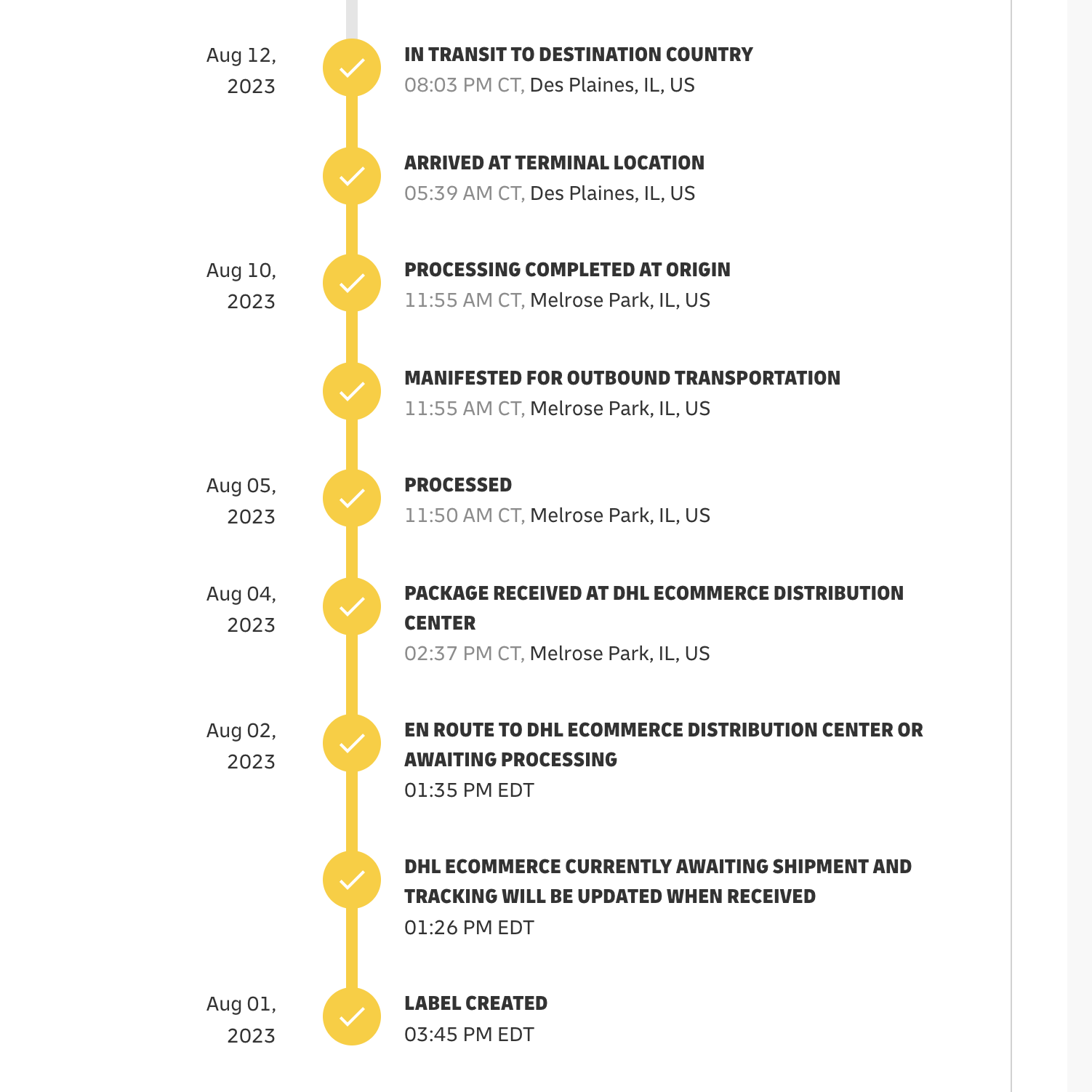
In contrast, DHL’s updates left much to be desired. There were significant time lags between updates, and the reasons behind these delays were far from clear. For instance, the package reached Melrose Park, IL on August 5th; however, it took a full week (!) until an update was registered, simply stating “In Transit to Destination Country.” As of August 16th (Japan time), the package’s whereabouts remain uncertain. Is it still in the US, or has it already arrived in Japan?

Another reminder of the exceptional quality of service provided by Japanese delivery companies.

怪物 , Monster , the movie

Kore-Eda san’s “Monster” won the screenplay prize (to Sakamoto Yuji) at Cannes Film festival.

Went to see it on the opening day in Shibuya, it was a very stormy night with very strong rain which caused floods and even casualties, but I want to write about the movie.

It is a good movie.
Very difficult to write about it without disclosing the “secret” part of the story, so will not write about the movie but the way it is being marketed in Japan. The movie Trailer is shown quite often which I also believes attracts a lot of attention, But(!) to me it feels misleading. The way scenes are glued together to enhance mystery and fear as if there is horror behind, as if the adults have secrets which harm the children.
Well, the adults do have secrets, and children are always affected by them, but this is not the main story… or so I think. Maybe this is the strength of the story, but I do feel manipulated by the trailer.

Great movie, great writing, actors and filmography, highly recommended, but please avoid watching the trailer .

Japanese Whiskey

I have a deep appreciation for Single Malt Japanese Whiskies. I used to be able to purchase them quite frequently around 10 years ago, but nowadays, it has become increasingly difficult, and at times even impossible, to find them.

The combination of limited availability and rising prices has made acquiring these whiskies quite challenging. I recently heard from a bar owner that even if they attempt to order them, there is a significant lead time and the prices are exorbitant.

For instance, the price of Yamazaki 12-year-old whisky has skyrocketed to approximately $200, whereas in the past, I used to purchase it for around $60-80. As for Yamazaki 18-year-old, I was fortunate enough to have bought it several times in the past for about $200, but it has now become completely unavailable, and if it were to be found, it would be far beyond my means.

The same unfortunate situation applies to other esteemed brands such as Hakushu (白州) and TakeTsuru (竹鶴).

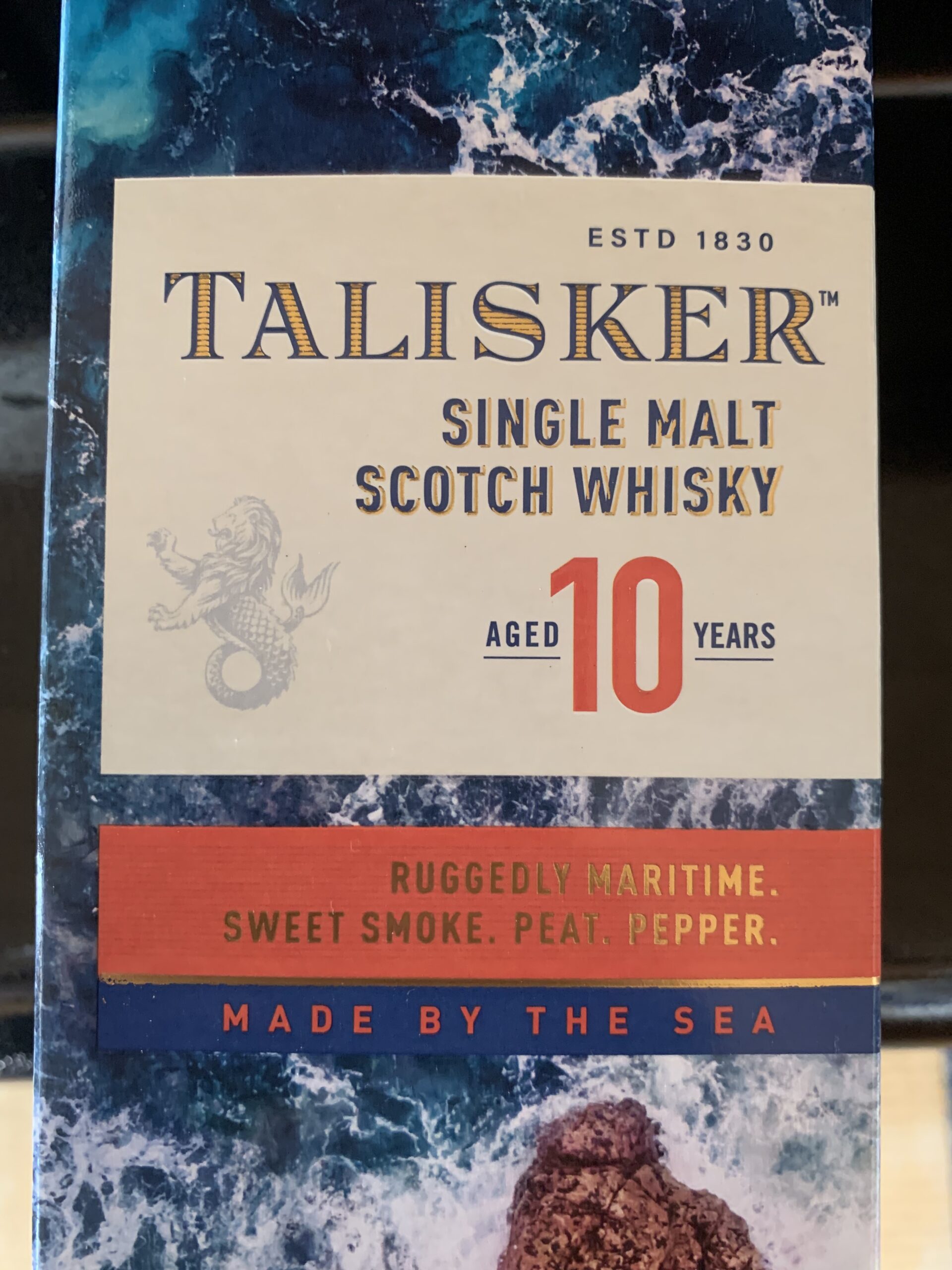
Oddly enough, I can still manage to acquire Scotch whiskies. Although they have become slightly pricier compared to several years ago, they are still accessible. Just yesterday, I ordered Talisker from Amazon and it was promptly delivered to me on the same day. I can’t complain about Scotch whiskies, as they are undoubtedly exceptional, but I do long for the opportunity to enjoy Japanese whiskies once in a while.

Long queues at airports

Recently, I traveled to Korea and experienced long queues, which made me wonder about the reasons behind them.

Check-In Queue: Even though there was a check-in terminal, it refused to check me in. Probably due to visa requirements and COVID-related checks, which I assume will disappear soon. So, even though I checked in online and only had carry-on luggage, I had to queue. The process took longer than usual, and it seemed slower than before. The time dedicated to each passenger was much longer than pre-COVID, and the number of open stations was insufficient. I am not sure whether it is due to new systems, visa requirements, or untrained staff.

The same thing happened on my way back from Gimpo Airport. If it previously took me two minutes to check-in, it now took ten minutes, and I was one of the faster ones. Even though Japan canceled requirements for COVID tests or vaccines, I was still asked about it and had to spend time proving I am qualified. The number of open check-in stations was much less than I remembered pre-COVID.

Security queues: There was a long queue in Haneda, probably due to the number of tourists or the new introduced systems. It took a while to pass security. Gimpo, on the other hand, was very short and easy. They were using the same old systems, and there were many open security stations.

Immigration: Entry to Korea took about an hour, which was much longer than in the past. Previously, when Korea citizen’s queue was empty, staff used to direct the foreigners to the empty lanes to expedite the process. However, this did not happen this time, and although the Korea citizen’s queue was empty, all foreigners still had to stand in the same queue. The system was not that different, but it took longer than pre-COVID.

Conclusions? I am not sure if I can draw any conclusions, but I speculate that new systems, which are supposed to reduce “friction,” may actually increase it.
Airlines have let go of their ground staff and now rely on new hires or outsourcing, which may contribute to the issue. Additionally, the number of open stations is not sufficient. I hope this improves quickly as international travel becomes normal and COVID restrictions are lifted in most countries around the world.

Thoughts about History Channel’s Alone

I watched only the first three seasons of the History Channel’s “Alone”. I think binge-watching three seasons is more than enough, and anyway, that’s all I could find on Prime Video.

While watching, I was thinking about the lessons I could learn from the series to convince myself that I’m not just wasting my time. Here are the lessons I wrote to myself:

Surviving alone is difficult (duh!). We are social creatures and need not only interaction but also support from others.

What separates the winners from those who decide to retire? I couldn’t completely grasp it, but it seems to be a lot about willpower and focusing on surviving the day. The third season was a bit more interesting as some players were forced to retire so as not to hurt themselves. They had the willpower but not the fat reserves and luck (?) to catch food.

Mistakes in nature are costly, such as falling while climbing, cutting yourself, or suffering hypothermia after falling into cold water. Even some of the most talented players who built amazing boats and tools failed to survive due to mistakes.

In our normal lives, this is actually less relevant. Mistakes can be costly, but much less so. Medical care and support from others (and the government) can help our survival. We should worry less about mistakes nowadays.

There is a scarcity of food these days. Not only were the players limited in what resources they could consume, but resources were also limited due to pollution and extinction of species.

All players went back really appreciating their lives and families and understanding that they can survive whatever may happen to them. They can work in jobs they do not enjoy, but at the end of the day, they go back home to their families and dinner. It is sometimes important to disconnect from day-to-day lives to rediscover it.

Unsocial Distance by Kanehara Hitomi

This post was in my draft folder for several months. A bit of neglect and a bit of not knowing how to “wrap up” or summarize the post. Excuse me if this post seems unfinished… it is unfinished. Would also recommend reading the paper by Mina Qiao, “Love in the Time of Corona: Heterosexual Romance, Space, and Society in Japanese Fiction on COVID-19”. which only refers to the story “Techno Break”.

I was not familiar with Kanehara Hitomi’s books until reading one of her stories in a literary magazine. It was different, a bit unsettling and definitely different from the other stories in the magazine.

Darker, connects with compulsive behavior, fears , addictions, sex. So obviously I was intrigued and searched for more information. Her debut book was adapted to the cinema by Ninagawa Yukio (!!!) , “Snakes and Earrings (蛇にピアス” which I watched, but I never judge a book by the movie, so will have to read it when I find the time.

As for “Unsocial Distance” which definitely connects to the Covid experience, the fears it generated, the changes in society although I could connect the stories to people I know, storied I heard which are connected to Covid.

Strong Zero – ストロングゼロ – Alcohol dependency , sleeping around just not to face the (good looking) boyfriend who suffers psychological issues, depression. At times, the addiction and hiding it seems a bit comical.

Debugger – デバッガー – Trying to stay young , date a younger man who loves her as she is, but still she is addicted to treatments, surgeries, refusing nature and trying to stay young.

コンスキエンティア (Conscience)- cheating on husband, sleeping with her friend’s brother . wants to feel needed

Unsocial Distance – アンソーシャルディスタンス – Couple story

Techno break – テクノブレイク – This story was published in the magazine and attracted my attention. Corona fears, tracking the boyfriend location, addiction to porn, addiction to taking her own sex videos and re-experiencing them.

Mitski

I enjoy Mitski’s music and was lucky enough to see her live in Tokyo.

As I don’t use TikTok, I was not familiar with her TikTok success and was surprised that her latest (good album) is also a big commercial success. Read about it and a quick search on youtube showed collection of Tiktok memes.

So imagine how surprised I was when I heard “Stay Soft” playing in a Supermarket (Tokyu in Futako Tamagawa) in Japan. I wonder who selects the Music for the supermarket and if that means Mitski is becoming “main stream”