“From the River to the Sea” at Mori Art Museum, Tokyo

Disclaimer : This blog post and the opinions expressed are my own and do not necessarily represent the views of my employer.

The phrase “From the River to the Sea” has been widely used by pro-Palestinian demonstrators. It took some time for governments, the media, and the wider public to understand that it is, in fact, a call to destroy Israel. It is not a call for peace and freedom, but a call to destroy the State of Israel. As such, some countries consider it hate speech and prosecute it accordingly (Germany and Australia—specifically Queensland—being recent examples).

You can imagine my surprise when I saw this art piece by “Multiple Spirits.” It prominently features the Japanese text 「川から海へ」 (“From the River to the Sea”), the headline “Cannot Forgive Massacre,” and a watermelon (a well-known pro-Palestinian symbol). Don’t you find it strange that the same artwork appears to call for the murder/displacement of all Jews in Israel while simultaneously claiming it “cannot forgive [a] massacre”?


You can read about the zine and the artists on the Mori Museum X Account:

Multiple Spirits Formed 2018 in Vienna; based in Vienna and Tokyo Multiple Spirits is a queer feminist art zine press and research platform founded in 2018 by Maruyama Mika and Endo Mai. The duo’s practice centers on reimagining the historical genealogies of queer feminism and dismantling historically constructed notions of identity. Its activity extends to exhibitions, lectures, and workshops, cultivating alternative modes of knowledge and community. Multiple Spirits’ zines have developed languages aligned with lived realities, linking girl’s culture and queer culture across Japan and beyond. Through interviews, collaborations, and exhibitions, the duo have expanded beyond press format and gender themes to interrogate the very forms of creation. The project insists on intersectionality, addressing overlapping systems of discrimination and colonialism rather than isolating gender or sexuality as single issues. This presentation is tied to the forthcoming zine “The Dungeon for the Shade of the Living Light,” which explores the metaphor of the “vine-like archive.” Here, the vines reflect how knowledge tangles across boundaries, shifts meaning, and enables queer reading resisting linear time. This installation includes cyanotype-printed and bundle-dye textiles, and archival materials encompassing representations of the “New Woman” across Asian cities, revealing a hidden history of feminist discourse in the region.

Photo from the” “Multiple spirit” X Account:
https://x.com/marusupi_/status/2008737299023188444/photo/1

Obviously, artists are free to express whatever they want, no matter how controversial. My biggest problem, however, is with the curator, the museum, and the sponsors of this exhibition. I am certain the curator understood the meaning, the museum personnel approved it, and they may even have thought it was “important” to display.

Exhibition Grants were provided by :

  • Embassy of the Kingdom of the Netherlands
  • Mondriaan Fund
  • OCA – Office for Contemporary Art Norway
  • Austrian Federal Ministry for Housing, Arts, Culture, Media and Sport

Corporate sponsors:

  • Anthropic
  • OBAYASHI CORPORATION
  • Sanyo Trading Co., Ltd.
  • Contemporary Art Foundation

I wonder whether the sponsors and grant providers are aware of this message and whether they agree with it.

By the way, Anthropic publishes the following about Claude on its website. I wonder if this art piece qualifies as “broadly ethical”:

Broadly ethical: Having good personal values, being honest, and avoiding actions that are inappropriately dangerous or harmful.

There is no clear public email for the museum, so I left a message via the contact form. I have not received a reply yet. I will update this post if I do—and I will definitely not visit the museum until they clarify their position on this issue.

Update:
Response from Mori Museum:
Thank you for taking the time to contact us.

Since its founding, Mori Art Museum has pursued its mission as a space for encountering the world’s diverse cultures, histories, and values through artistic practice — a place that fosters multifaceted dialogue and understanding. The presentation of works at Mori Art Museum does not imply endorsement of any particular political position expressed within individual works.

We recognize that maintaining neutrality in today’s increasingly complex global landscape is no easy task. It is precisely this difficulty that we continue to face, as we remain committed to fulfilling our role as a space for dialogue.

We are deeply grateful for taking the time to share your thoughts with us.

Mori Art Museum

My response, which has not changed:
I fully support art and fostering multifaceted dialogue. But I am quite certain Mori museum will not display an art piece calling for a destruction of another country, race. As such their response is far from satisfying.
Biased reporting – 報道ステーション March 9th 2026

As always, this blog post and the opinions expressed are my own and do not necessarily represent the views of my employer.

報道ステーション (Hodo Station / News Station) is a news program on the TV Asahi network. I often watch it as one of the few news programs aired at 10 PM.

What triggered this post was the heavily biased coverage on March 9th. The program opened with roughly 10 minutes on the Iran situation, focusing almost exclusively on the Iranian side and human stories from Turkish interviews. There was virtually nothing about Iran’s missile and drone attacks on the UAE, Qatar, Saudi Arabia, Israel, or other Gulf states.

Newscaster Kensuke Okoshi (大越健介) concluded the segment with his commentary on the “different concepts of justice.” He stated as fact:

「今回、アメリカやイスラエルがイランの攻撃に一方的に踏み切ったことは、国際法の違反だという国際世論が圧倒的で、その意味では正義とは言えません。」

(“The unilateral military action by the US and Israel against Iran is considered a violation of international law by overwhelming international opinion, and therefore cannot be called justice.”)

He presented this not as his personal view, but as unquestionable reality. In his official postscript published the same day on the TV Asahi website, he went even further:

「明らかに国際法違反だと識者は指摘する。」 「軍事力に勝るアメリカという強者が、イランという国家を踏みにじる行為は国際法違反であり、看過できない。」

I’m very familiar with this style of biased reporting from the New York Times, The Guardian, and the BBC. But I was surprised to see it at this level on Japanese television. Of course media bias has been shaped by two years of conflict, but this specific report felt particularly one-sided.

Growing up, I always knew which newspapers leaned left or right. I learned early that I needed to read multiple sources to form my own opinion. During the Cold War, we understood that Soviet media’s job was to distort reality to fit the party line — yet it was sometimes still useful to read them to understand their perspective.

Today, when most mainstream media operates with a clear agenda, I wonder if we’re seeing the end of traditional journalism. If I can’t trust journalists to rigorously check facts, challenge assumptions, and present balanced context, who can I trust?

X (Twitter) is biased. Newspapers are biased. Television is biased. We’re constantly fed information shaped by political views — and sometimes outright paid propaganda from foreign states.

I had hoped Japanese news outlets would maintain higher standards, but the March 9th 報道ステーション report proved otherwise.

Very disappointing. I’ll probably take a break from the show for a while. There’s already more than enough propaganda on the internet.

(You can watch the exact segment here: https://www.youtube.com/watch?v=JbbQXrU_6B0)

NHK 未解決事件 日本赤軍 unsolved cases Japanese Red Army


NHK’s “Unsolved Cases” is a new documentary series. I’ve enjoyed a few episodes and was looking forward to watching the one about the Japanese Red Army.

You can imagine my shock when the documentary failed to explain what the Japanese Red Army even was—and in many moments, it felt like the director was trying to whitewash their crimes.

The documentary started with the student uprisings and the formation of revolutionary communist groups. It then focused on Fusako Shigenobu, the formation of the Japanese Red Army, and its history.

As a reminder: The Japanese Red Army was designated a terrorist organization that carried out attacks in Japan and around the world. One of their earliest and deadliest attacks was at Israel’s Ben Gurion Airport, killing 26 people and injuring about 80. Many of the victims were Christian pilgrims. The Red Army continued to kidnap, demand ransoms, and kill—and in one case, they demanded the release of a criminal from a Japanese jail who had been convicted of murder. He wasn’t even related to the Japanese Red Army; he was just a murderous criminal.

The documentary attempted to portray the Japanese government’s efforts to catch or stop the terrorist organization as proactive, when in fact their leader (Fusako Shigenobu) was arrested in Japan (!!!) in 2000—years after the organization had ceased to be effective.

Many minutes of the documentary were filled with interviews of Fusako Shigenobu and another member of the terrorist organization. In some cases, she expressed remorse for killing innocent people, but in most, she was smiling at the camera, laughing, and saying that Kozo Okamoto’s actions and their support for Palestinian terrorist acts were understandable, adding things like “now you understand.”

Where the documentary failed:

  • No voice from the people affected by the terrorist attacks. No interviews with victims.
  • It gave a convicted terrorist an opportunity on national TV to whitewash her crimes.

I’m usually not the type of person to complain about TV shows, but this one really shocked me, so I provided similar feedback to NHK.

Shipment from the US or “why does it take so long”

I ordered a product from dbrand and selected the standard shipment method via DHL, expecting it to arrive in Japan within approximately 10 days.

Having been accustomed to Japanese delivery companies, where most deliveries arrive the next day accompanied by frequent location updates, the contrast was quite noticeable. As an illustration, I ordered a few days ago a Vinyl record from Kyoto, and it was delivered the very next morning, with a series of four location updates provided until the moment of delivery.

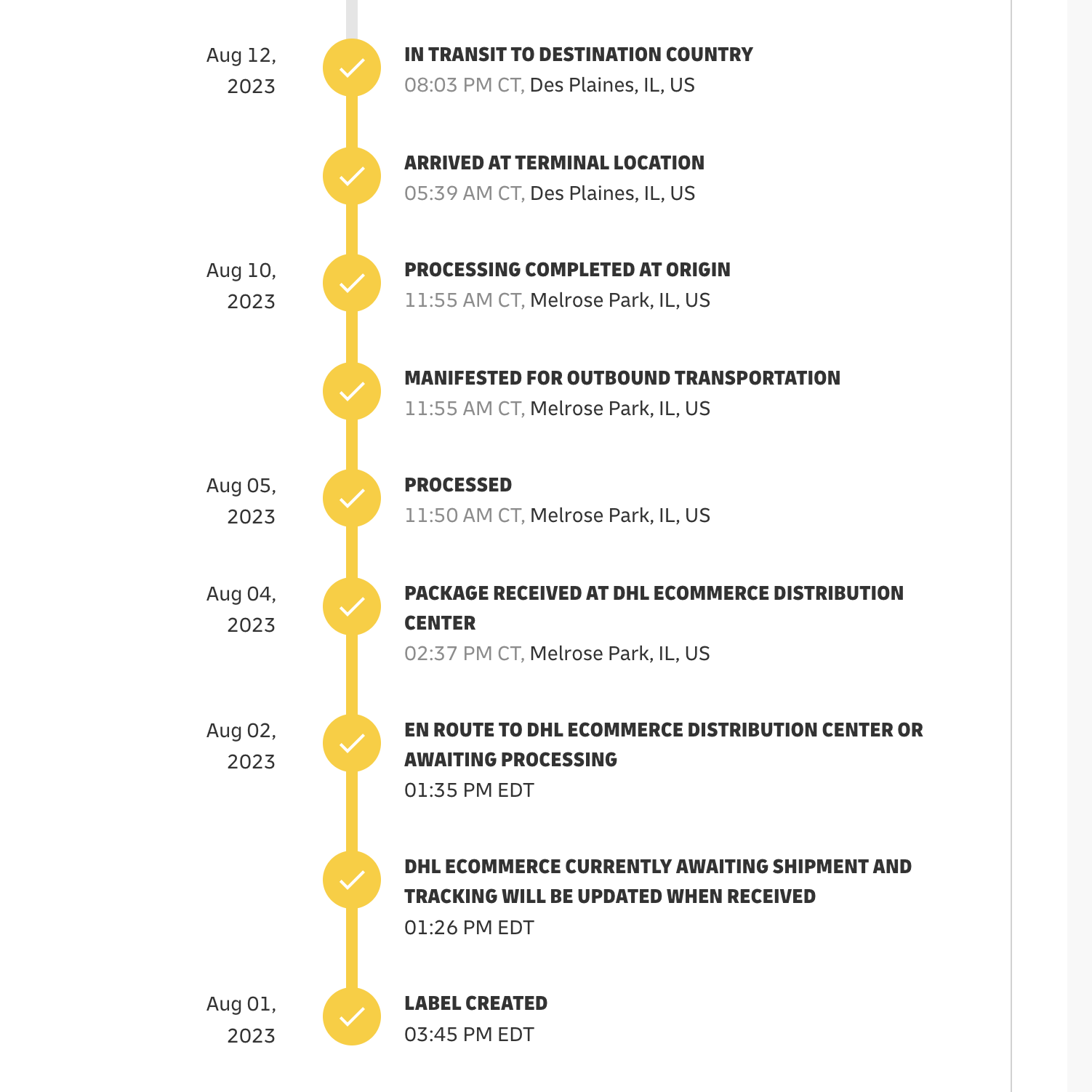
In contrast, DHL’s updates left much to be desired. There were significant time lags between updates, and the reasons behind these delays were far from clear. For instance, the package reached Melrose Park, IL on August 5th; however, it took a full week (!) until an update was registered, simply stating “In Transit to Destination Country.” As of August 16th (Japan time), the package’s whereabouts remain uncertain. Is it still in the US, or has it already arrived in Japan?

Another reminder of the exceptional quality of service provided by Japanese delivery companies.

怪物 , Monster , the movie

Kore-Eda san’s “Monster” won the screenplay prize (to Sakamoto Yuji) at Cannes Film festival.

Went to see it on the opening day in Shibuya, it was a very stormy night with very strong rain which caused floods and even casualties, but I want to write about the movie.

It is a good movie.
Very difficult to write about it without disclosing the “secret” part of the story, so will not write about the movie but the way it is being marketed in Japan. The movie Trailer is shown quite often which I also believes attracts a lot of attention, But(!) to me it feels misleading. The way scenes are glued together to enhance mystery and fear as if there is horror behind, as if the adults have secrets which harm the children.
Well, the adults do have secrets, and children are always affected by them, but this is not the main story… or so I think. Maybe this is the strength of the story, but I do feel manipulated by the trailer.

Great movie, great writing, actors and filmography, highly recommended, but please avoid watching the trailer .

Japanese Whiskey

I have a deep appreciation for Single Malt Japanese Whiskies. I used to be able to purchase them quite frequently around 10 years ago, but nowadays, it has become increasingly difficult, and at times even impossible, to find them.

The combination of limited availability and rising prices has made acquiring these whiskies quite challenging. I recently heard from a bar owner that even if they attempt to order them, there is a significant lead time and the prices are exorbitant.

For instance, the price of Yamazaki 12-year-old whisky has skyrocketed to approximately $200, whereas in the past, I used to purchase it for around $60-80. As for Yamazaki 18-year-old, I was fortunate enough to have bought it several times in the past for about $200, but it has now become completely unavailable, and if it were to be found, it would be far beyond my means.

The same unfortunate situation applies to other esteemed brands such as Hakushu (白州) and TakeTsuru (竹鶴).

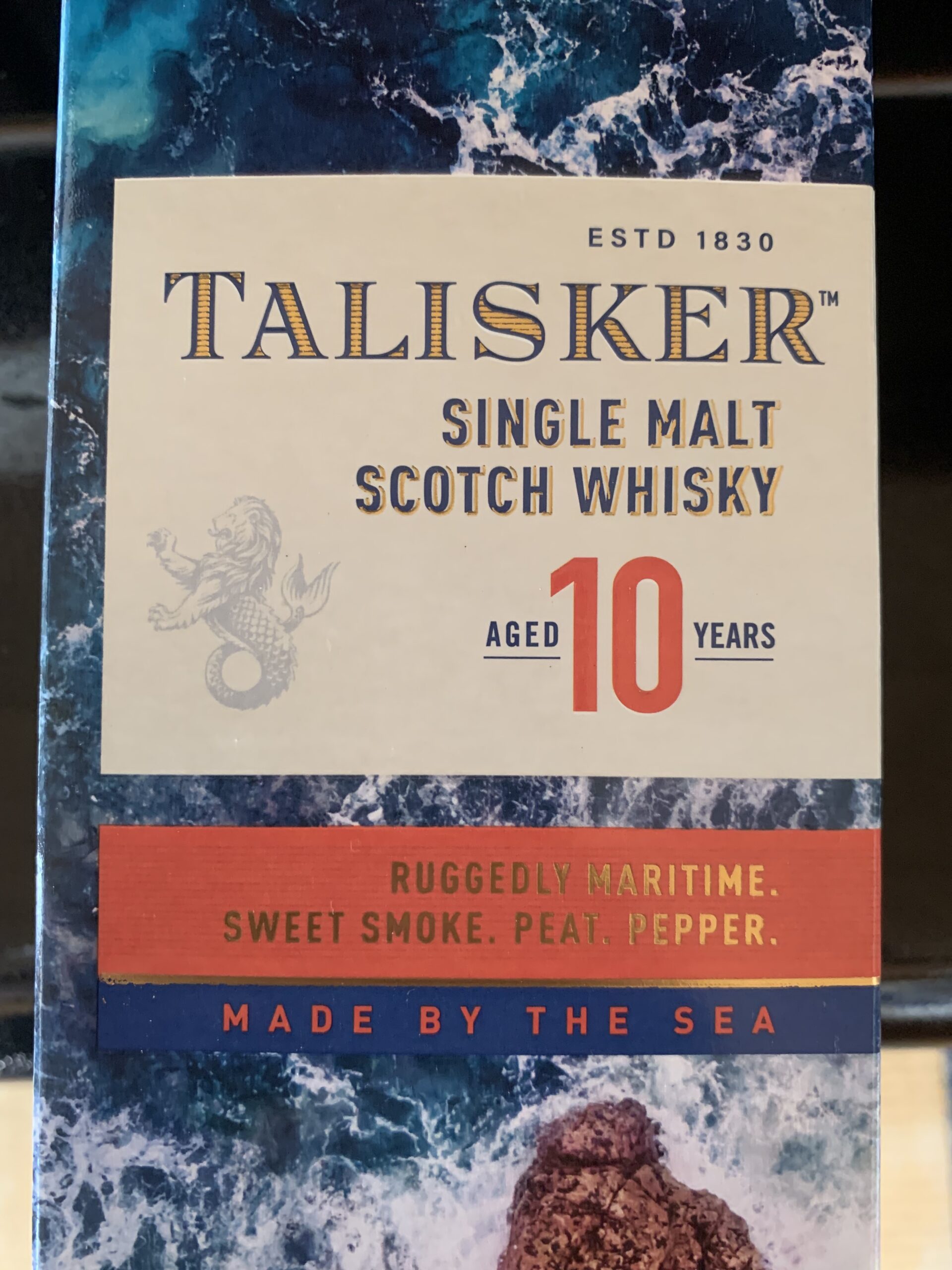
Oddly enough, I can still manage to acquire Scotch whiskies. Although they have become slightly pricier compared to several years ago, they are still accessible. Just yesterday, I ordered Talisker from Amazon and it was promptly delivered to me on the same day. I can’t complain about Scotch whiskies, as they are undoubtedly exceptional, but I do long for the opportunity to enjoy Japanese whiskies once in a while.

Mobile Monthly plan Japan

Or how come I pay a full monthly plan for only one day(!)

I have recently changed from one of the major mobile network operators in Japan to a lower cost. Doing that will help me lower the monthly plan from around 9000 Yen to 3000 Yen.
As I selected a low cost provider which is associated with my previous one, the procedure was very simple and fast.

But, what I forgot to consider is the actual transfer date. Maybe I was being naive, maybe I thought that the date does not matter, but I changed providers on September 2nd.

Now, you would assume that I would have to pay for 1-2 days to my previous provider, but surprise surprise. I was charged for a full month! YES! 9000 Yen for 1 day service.

My kid told me :

Oh, it is well known. When you sign up, you pay for only the time you joined, but when you move out, you pay for the whole month

That means that for the month of September, I am paying a full month for my previous provider and almost a full month for my new one.

Isn’t this something that the Japanese government needs to regulate and control ?

I thought about complaining/calling, but if this is a common practice in the Japanese mobile market, maybe I should focus my efforts in discussing with consumer protection groups.

Will think some more about it.

Did not write the names of the providers as I guessed it does not really matter.

Murata Sayaka book translated to Hebrew

Just say in ynet that Murata Sayaka (村田沙耶香)’s book was translated to Hebrew.

While in Japanese the name of the book is コンビニ人間 , meaning “a person of the Convenience shop” , in Hebrew the title is “בשולי הנוחות” which is a word play of Conveience, meaning “the Edge of Conveience”.
Have to say I do not like the Hebrew title as I feel it does not keep the meaning of the Japanese title.
The book cover is also problematic a shows a take away paper bag which may be popular in the US, but definitely not in Japan .

Shurijo -首里城 – Flickr Stats

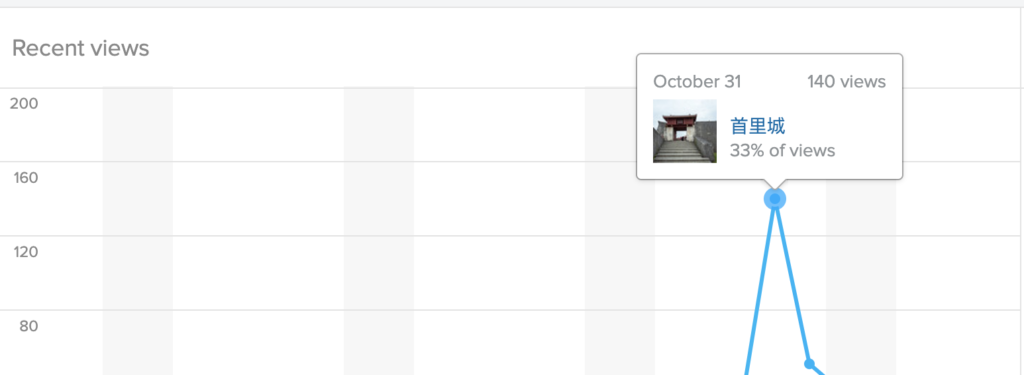
Shuri Castle (首里城) was burnt on October 31.

Same day, my photos of Shuri castle peaked on Flickr

Very happy I had the chance to see it in its glory and hope it will be rebuilt soon.

From this simple example, I can just imagine the amount of data Flickr can extract from searches and trend deduction, but I doubt if they do it.
We all know Google do.

Fukuoka 福岡

Was on a short business trip to Fukuoka, which reminded me that I love this city.

Big, but not too big. Small, but not too small. I really think Fukuoka can (and probably already) attract people from Tokyo area. Read several articles about efforts to create start-ups in Fukuoka and I do feel it has the right infrastructure and “spirit” to accommodate it.

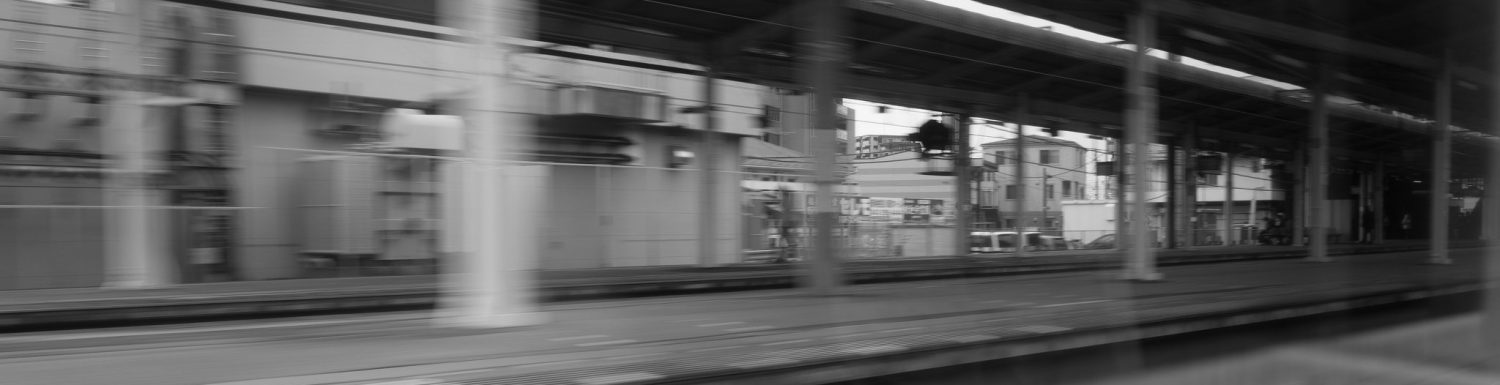
Had only a short walk to take photos, which resulted in the following two.

福岡 屋台
Fukuoka Nakasu